
+86 15165536825
7army1.26@gmail.com
Choosing the right blockboard panel is one of those foundational decisions where the details truly matter. Beyond initial pricing or surface appearance, a panel's long-term durability comes down to core timber quality, precision engineering, and manufacturing consistency. A minor variation in core moisture can cause a finished wardrobe door to warp months down the line, while unseasoned softwood battens or uneven resin curing can lead to surface telegraphing and edge chipping during high-speed machining.
Whether craftspeople are building high-end custom cabinetry, interior contractors are fitting out commercial spaces, or distributors are stocking building materials globally, understanding what goes into a reliable blockboard panel makes all the difference. Key factors such as timber core species, batten jointing methods, bonding standards (MR vs. BWP), surface calibration, and production stability dictate how well a panel performs under real-world conditions.
To help navigate the global manufacturing landscape, the following ten companies represent the leading blockboard manufacturers to consider in 2026, evaluated for their production capabilities, technical standards, and market presence.
Founded: 1994
Highlights: Major Indian interior infrastructure brand; certified IS 1659 compliance; zero-emission and eco-friendly panel options.
Main Products: Plywood, Blockboard, Decorative Veneers, MDF, Doors, Specialty Plywood and Interior Products
Introduction: Greenply operates as one of India's largest infrastructure and panel board entities. Its blockboard division concentrates heavily on standardized residential and commercial grades, marketed under product lines like Green Gold, Greenply MR 303, Ecotec, and Optima G. The technical value proposition centers on health standards and structural resistance; Greenply incorporates zero-emission resin systems alongside pest-proofing treatments. Their top-tier boards conform strictly to IS 1659 guidelines, giving domestic contractors and regional importers standardized benchmarks for screw-holding strength, modulus of rupture, and thickness tolerance across repeat shipments.
Founded: 1982
Highlights: Five regional production plants, 16 sales offices, over 300 active dealers, deep institutional supply history.
Main Products: Plywood, Blockboard, Flush Doors, Specialty Plywood, Decorative Laminates and Related Wood Products
Introduction: Kitply's position in the timber panel industry rests on forty years of continuous manufacturing history. Founded in Assam, the company built its operations directly adjacent to traditional Indian timber processing zones before expanding into a nationwide network. Utilizing five manufacturing plants, Kitply supplies blockboard engineered for heavy structural loads, door frames, and built-in cabinetry. Their internal R&D focuses on core stability and resin formulation to prevent warping under fluctuating humidity—a crucial factor for project buyers managing large-scale commercial developments or government infrastructure contracts.
Founded: Not publicly stated on the official website
Highlights: 40,000 m² plant, 360,000 sheets/month capacity, direct access to high-density Guangxi eucalyptus, in-house resin manufacturing.
Main Products: Eucalyptus Plywood, Furniture Boards, Film-Coated Construction Formwork, Birch Plywood and Customized Wood Panels
Introduction: Operating out of Hechi, Guangxi, WeiYe provides high-volume factory direct supply suited for global distributors and large furniture factories. Guangxi's dense eucalyptus forests give the company a direct raw material cost advantage over manufacturers reliant on imported timber. WeiYe mitigates board core failure by running an integrated glue factory and modern hot-pressing machinery. With a verified output of 360,000 panels monthly and full OEM/ODM capabilities, they cater primarily to high-volume container shipments across Europe, the Americas, Africa, and the Middle East, complete with third-party pre-shipment inspections.
Founded: 1995
Highlights: High-pressure Melamine and Phenol bonding, IS 1659 certified lines, heavy focus on interior architectural materials.
Main Products: Blockboard, Plywood, Decorative Laminates, Veneers, Flush Doors, Specialty Boards and Interior Materials
Introduction: Archidply structures its blockboard manufacturing around specific interior climate exposure. Their MR (Moisture Resistant) Grade uses seasoned hardwood battens bonded under intense pressure with Melamine Formaldehyde Resin. For environments exposed to severe moisture, their BWP (Boiling Water Proof) lines utilize Phenol Formaldehyde formulations. Lines like MR Gold, BWP Gold, MR Classic, and BWP Classic Plus come in standard 19mm and 25mm callipers. This clear technical differentiation makes Archidply a standard reference point for architectural specifiers needing certified physical panel metrics for commercial fit-outs.
Founded: 1957
Highlights: Over six decades of specialty wood processing, proprietary chemical preservation, high dimensional stability.
Main Products: Plywood, Blockboard, Marine Plywood, Flexible Plywood, Commercial Plywood, Veneers and Specialty Boards
Introduction: With more than six decades in wood panel fabrication, Duro Ply's manufacturing focuses on material durability and anti-pest treatment. Their primary blockboard offering, Durobord, uses hand-selected timber cores subjected to vacuum-pressure chemical treatments that protect against termite and borer infestation. Duro's core construction emphasizes long-term dimensional retention, preventing linear expansion or edge warping. Commercial buyers often leverage Duro to consolidate mixed shipments containing marine plywood, decorative veneers, and structural blockboards under a single quality control standard.
Founded: 1960s
Highlights: Automated kiln-drying operations, gapless core construction, New Zealand pine utilization.
Main Products: Blockboard, Plywood, Laminates, Decorative Surfaces and Interior Products
Introduction: Merino leverages its background in decorative surface laminates to produce blockboards tailored specifically for lamination and high-end joinery. Products like Tuff Blockboard, Tuff Supremo, Super, and Mandasa are manufactured using automated kiln-drying facilities to guarantee exact internal moisture percentages. By utilizing New Zealand pine cores and high-precision finger-jointing, Merino eliminates internal gaps that typically cause surface sinking when laminates are applied. This gapless construction complies with IS 1659, appealing directly to automated furniture factories where machining precision is critical.
Founded: 1996
Highlights: Finger-jointed cores engineered for tall shutter stability, active exports to seven countries, calibrated thickness options.
Main Products: Blockboard, Calibrated Plywood, Marine Plywood, Birch Plywood, Flexible Plywood, Veneers, Flush Doors, OSB and Specialty Plywood
Introduction: Indiana Plywood solves a specific architectural engineering challenge: door and wardrobe shutter warping. Operating out of Indore, India, the company manufactures structural blockboard using tight butt-jointing and finger-jointing methods designed to maintain vertical stiffness in tall components exceeding two meters in height. Their facility delivers calibrated panels with tight surface tolerances, ensuring uniform glue lines during downstream veneering. Indiana's technical focus on anti-warp core arrangements has allowed them to establish ongoing export channels across seven international markets.
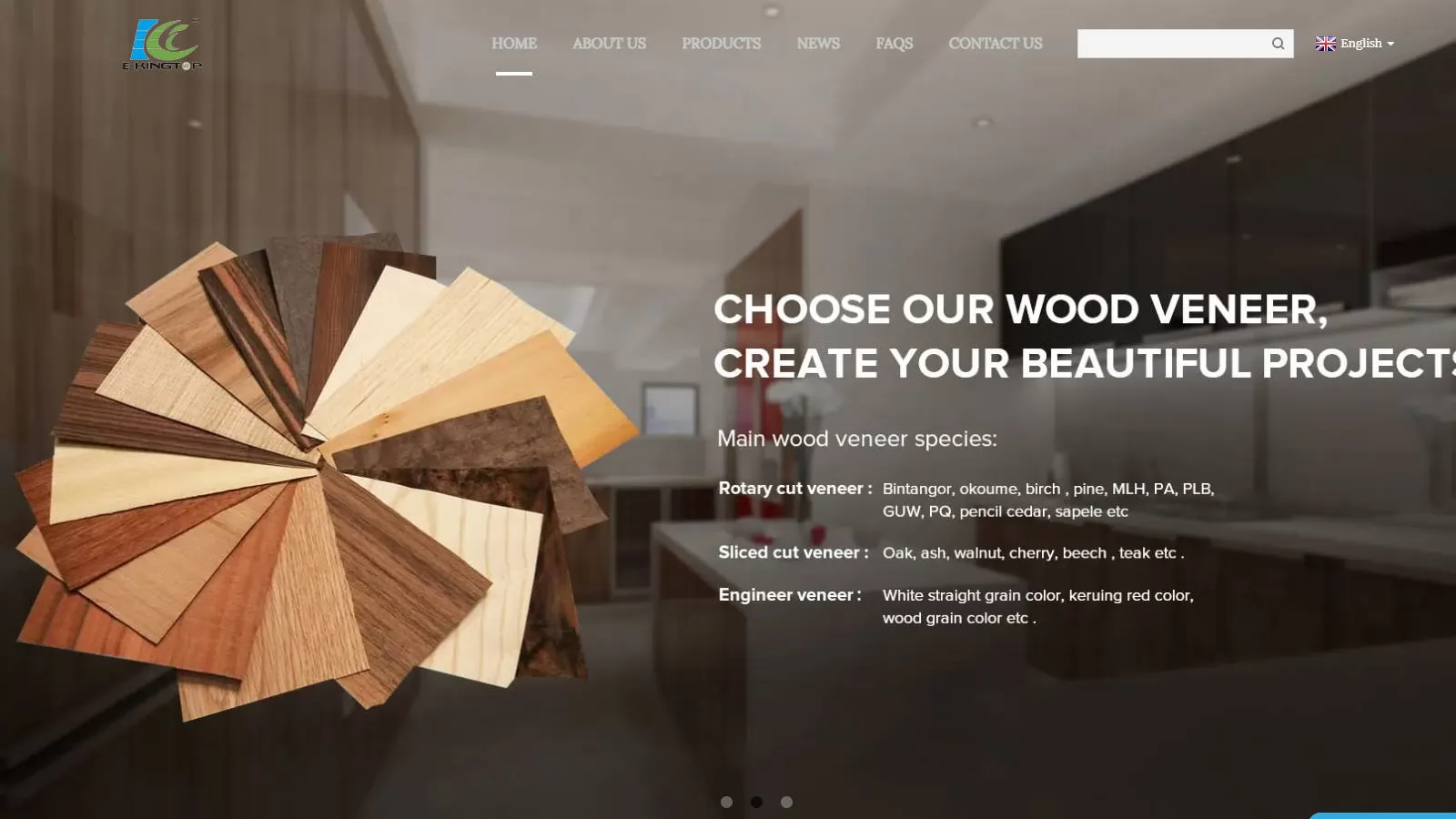
Founded: 2004
Highlights: Located in Linyi wood processing hub, ideal for mixed-panel container consolidation, broad export range.
Main Products: Blockboard, Furniture Plywood, Commercial Plywood, Film-Faced Plywood, LVL, MDF, OSB and Other Wood-Based Panels
Introduction: Linyi Dituo operates out of Shandong province, the heart of China's panel manufacturing industry. Rather than limiting output to a single panel design, Dituo functions as a high-flexibility supplier capable of supplying blockboard alongside LVL, OSB, MDF, and film-faced plywood. For international importers and building material distributors looking to minimize freight costs through mixed-container loads, Dituo provides direct access to Shandong's vast raw material supply chains, providing varied core constructions and formaldehyde emission grades (E0, E1, CARB) based on target market regulations.
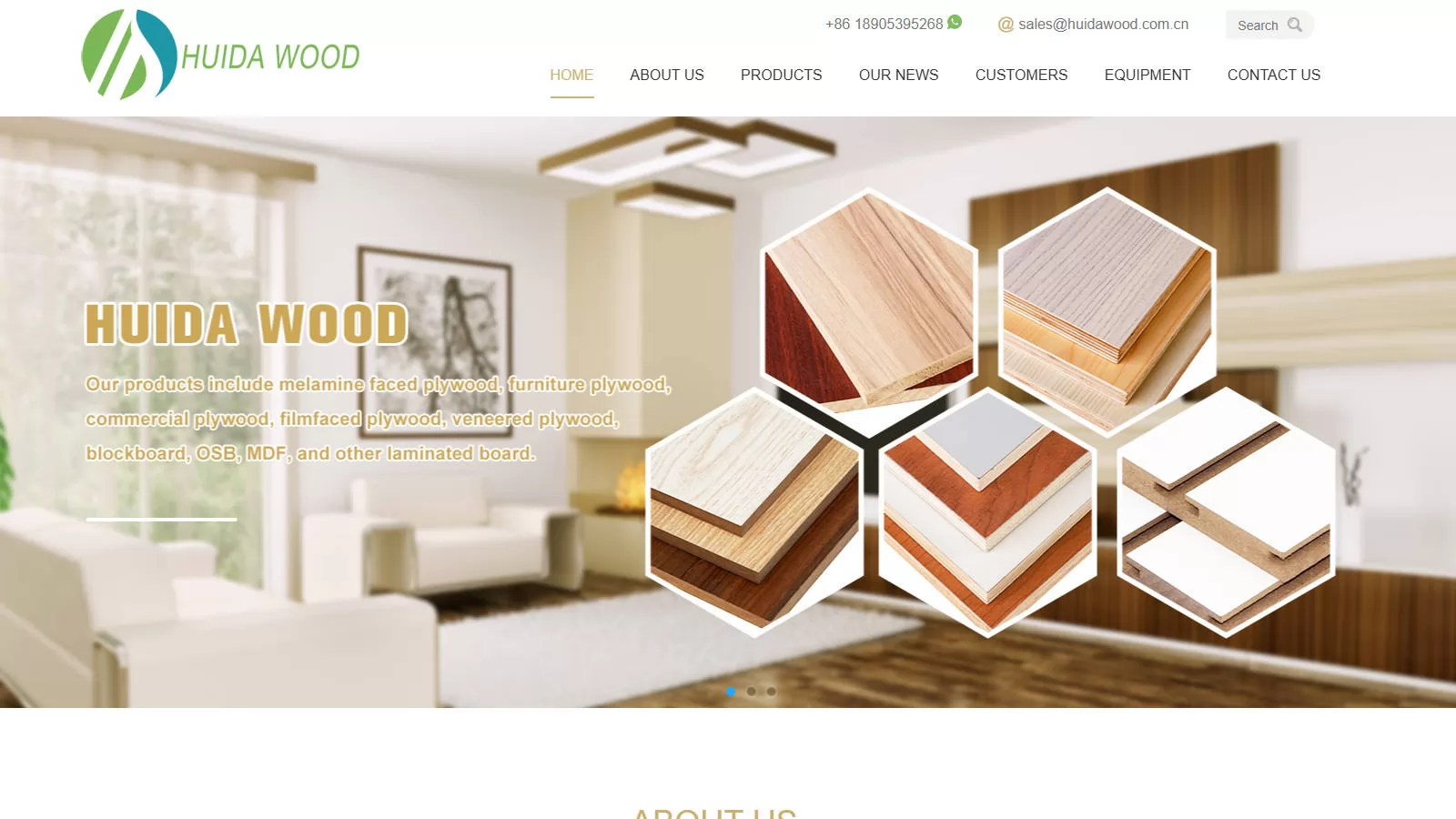
Founded: 2011
Highlights: Eco-friendly furniture substrate focus, automated pressing lines, comprehensive panel portfolio.
Main Products: Blockboard, Melamine-Faced Plywood, Furniture Plywood, Commercial Plywood, Film-Faced Plywood, Veneered Plywood, OSB and MDF
Introduction: Linyi Huida concentrates heavily on eco-friendly, low-emission panel substrates aimed at commercial furniture makers. Established in 2011, the company operates modern pressing and sanding equipment designed to yield uniform face flatness across blockboard and melamine-faced panels. Huida aligns its production with green building requirements, supplying interior contractors and furniture exporters who require verifiable low-formaldehyde content combined with stable screw-holding power for flat-pack furniture manufacturing.
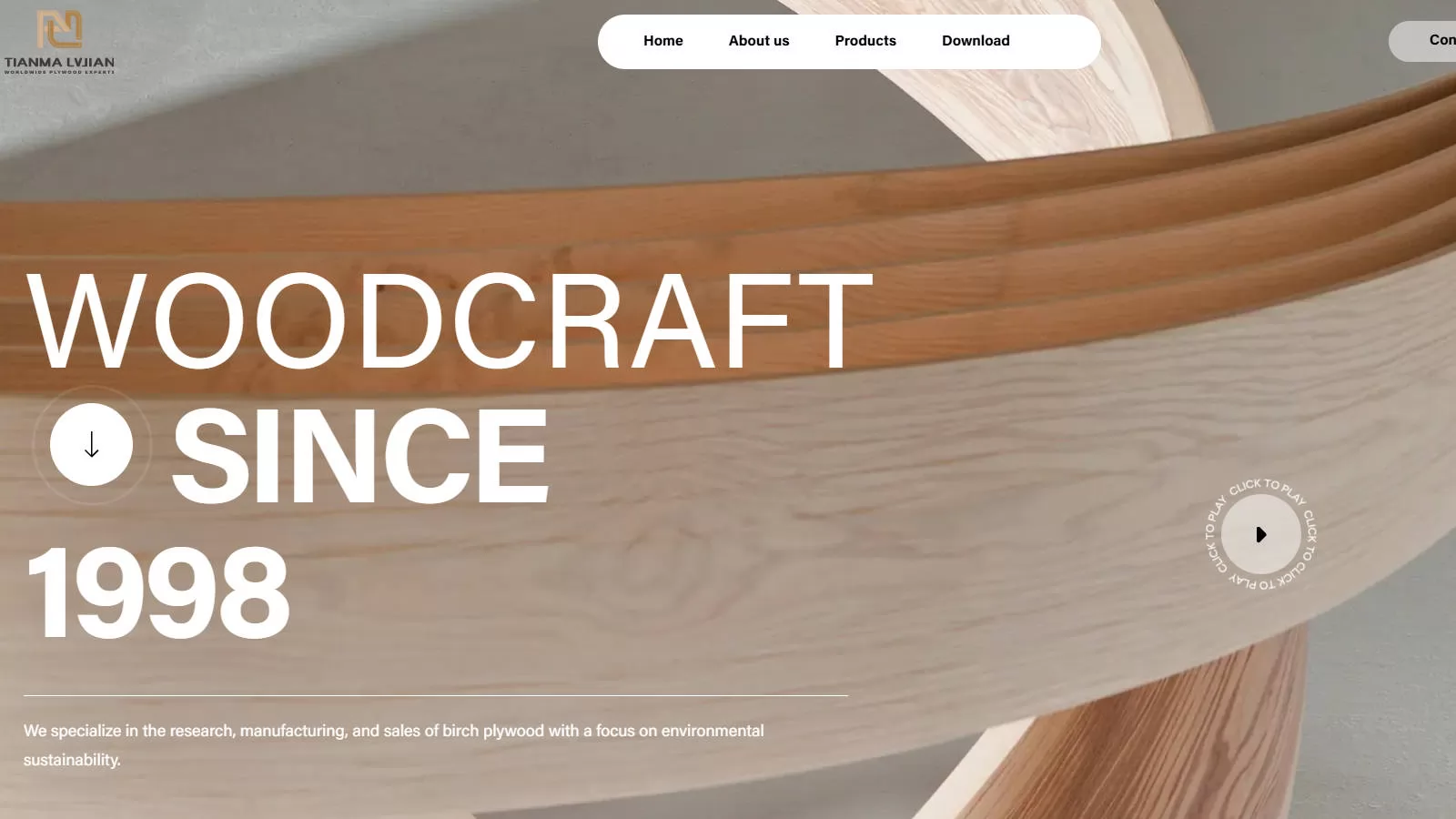
Founded: 1998
Highlights: Birch-faced specialty blockboard, pine/fir finger-jointed cores, guaranteed European E1 compliance, specialized blockboard plant.
Main Products: Blockboard, Birch Blockboard, Birch Plywood and Other Wood-Based Panels
Introduction: Tianma Lvjian operates as a specialized blockboard producer in Jiangsu, China, with over two decades dedicated specifically to core-board processing. Their flagship product—Birch Blockboard—combines smooth birch face veneers with finger-jointed pine and fir timber cores. This hybrid construction pairs the structural rigidity and low weight of softwoods with the dense, paint-ready surface of Baltic-style birch. Tianma Lvjian manufactures to standard export dimensions (4x8 ft, 5x10 ft, 5x5 ft) and ensures all panels conform to European E1 emission standards, making them a direct supplier for Western European cabinetry importers.
Selecting a blockboard factory purely on unit cost often leads to hidden manufacturing expenses downstream. Professional sourcing teams evaluate potential suppliers using rigid technical parameters:
The species, drying process, and assembly method of the internal battens directly control panel behavior under load.
Finger-Jointed vs. Butt-Jointed Cores: Finger-jointed battens mechanically interlock to create continuous structural rigidity, drastically reducing internal voids compared to simple butt-jointed layouts.
Moisture Management: Kiln-drying protocols must bring core batten moisture content down to 8%–12%. Panels pressed with higher moisture levels inevitably warp, twist, or delaminate as they acclimatize to destination environments.
Matching the resin matrix to the end-use environment prevents structural failure in high-humidity zones.
Moisture Resistant (MR): Bonded with Urea-Formaldehyde or Melamine-Formaldehyde resins. Designed strictly for dry interior joinery, residential wardrobes, and internal partitions.
Boiling Water Proof (BWP): Formulated with Phenol-Formaldehyde resins and fully cured under high pressure. Essential for kitchen carcases, bathroom vanities, marine interiors, and humid export markets.
When laminating with thin 0.2mm wood veneers or high-gloss HPL sheets, core telegraphing causes unacceptable surface waviness.
Look for facilities utilizing multi-stage wide-belt sanders that deliver calibrated blockboards within strict thickness tolerances (±0.2 mm to ±0.3 mm).
Verify cross-band veneer thickness to ensure it properly bridges minor irregularities in the core batten structure.
Destination markets mandate strict compliance regarding chemical off-gassing and timber legality.
Global Emission Grades: Western markets require verified E0/E1 certification or compliance with CARB Phase 2 / US EPA TSCA Title VI.
Domestic Standards: Regional projects often benchmark against standards like India's IS 1659, which specifies strict limits for glue-shear strength, screw extraction resistance, and water absorption.
Navigating the global wood-panel market requires aligning a supplier's core manufacturing capabilities with your exact commercial application. While established regional brands like Greenply, Kitply, Archidply, Duro Ply, and Merino offer certified IS 1659 standards and proven domestic distribution, global buyers often require factory-direct scale, custom panel specifications, and competitive export pricing. Chinese suppliers such as Tianma Lvjian, Linyi Dituo, and Linyi Huida serve distinct sourcing needs ranging from specialized birch-faced boards to multi-panel container consolidation.
For international importers, furniture factories, and distributors seeking a high-capacity, cost-effective manufacturing partner, WeiYe (Guangxi Weiye International Trade Co., Ltd.) stands out as a powerful supply chain solution. Leveraging direct access to Guangxi's high-density eucalyptus reserves, a massive 40,000 m² factory, an in-house adhesive plant, and a monthly production output of 360,000 sheets, WeiYe delivers the raw structural strength, flat-panel calibration, and volume stability required for large-scale B2B orders. Whether you need standard furniture substrates or customized OEM/ODM panels, WeiYe provides factory-direct export reliability with guaranteed batch-to-batch consistency.
Ready to streamline your wood-panel procurement or request custom specifications? Contact WeiYe today to discuss factory-direct pricing, sample evaluations, and international container shipping solutions tailored to your business.


